
Land Surveying Before You Divide or Improve Land
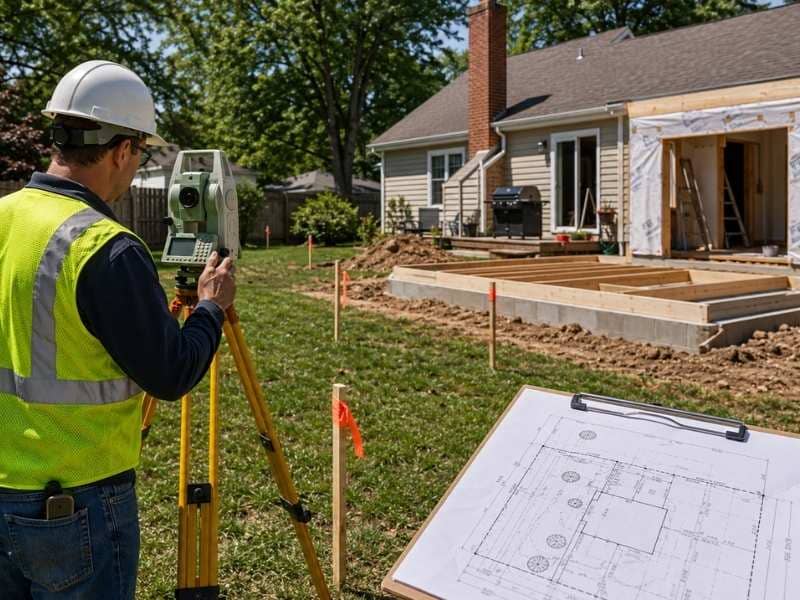
Land surveying is the first move before you divide your property or improve it. Both kinds of change run into the same thing: a property line you can’t afford to guess at. A survey shows exactly where your land sits and what rules apply to it. Skip that step, and a new project can cross a line or break a rule by accident. Start with a survey, and you build on facts instead of hope.
Dividing and Improving Both Start at the Property Line
Changing your land takes two main forms, and both lean on the same base. Dividing means splitting your property into separate lots or merging it with another. Improving means adding to the land you keep, like a new structure or a wider driveway. Different as they are, each one has to respect the true boundary.
That’s why a survey comes first in either case. For dividing, the survey sets the new lines and descriptions the county needs. For improving, it shows where you can safely build. The rest of this guide focuses on the improving side, since that’s where owners most often get caught off guard.
Why Improvements Run Into Hidden Limits
A backyard project feels simple until it meets a rule you didn’t know about. Most land carries setbacks, which keep buildings a set distance from the line. Many lots also have easements, which give someone else the right to use a strip of your land. Neither one shows up on the grass, so it’s easy to build right into a problem.
The property line itself is the biggest trap. People often guess it from an old fence or a hedge, and the guess is usually wrong. A pool, shed or addition placed over the real line can lead to fines or a forced rebuild. A survey clears all of this up before the first shovel hits the dirt.
Improvements That Usually Call for a Survey
Not every small job needs a surveyor, but many common projects do. The bigger or closer to the line a project is, the more a survey helps.
These improvements often need one:
- A room addition or second story
- A pool, deck or patio near the property edge
- A shed, garage or other outbuilding
- A new or widened driveway
- A retaining wall or major grading
Each of these takes up space and has to clear the line and any setbacks. A survey tells you how much room you really have to work with. That keeps a fun project from turning into a costly mistake.
What a Survey Settles Before You Break Ground
A survey answers the questions that decide whether a project can go ahead. First, it marks the exact property lines, so you know where your land ends. Second, it shows the setbacks and easements that limit where you can build. Together, those give you a clear buildable area for your improvement.
That clarity does more than prevent mistakes. It helps you design the project to fit from the start, instead of reworking it later. It also gives a permit office the proof they often want to see. With the survey in hand, you move forward knowing the plan is sound.
Fitting the Survey Into Your Project Timeline
The survey works best when it comes early, before you finalize a design. Knowing your lines and limits up front shapes the plan in the right direction. Order it late, and you may have to redraw the project after the fact. That costs time you could have saved.
A little prep makes the survey smoother too. Gather your deed and any old survey, and point out known corners or pins. Tell the surveyor what you plan to build, so the work fits your goal. Clear information at the start leads to a faster, more useful result.
Frequently Asked Questions
Do I need a survey to build a shed, pool or driveway?
Often, yes, especially if the project sits near the property line. These improvements have to clear the line and any setbacks. A survey shows you exactly how much room you have before you build.
Can I build over a utility easement?
Usually not, since an easement gives someone else the right to that strip of land. A pool or shed placed on one may have to come out later. A survey shows where easements run, so you can plan around them.
What land changes usually need a survey?
Both dividing and improving land tend to need one. Splitting or combining lots requires new lines and descriptions. Larger improvements need a survey to clear setbacks and the property line.
Will a survey help me get a building permit?
It often does. Permit offices want proof that a project respects the lines and setbacks. A clear survey gives them that, which can speed up approval.
How is improving land different from dividing it?
Improving adds something to land you keep, like a building or a driveway. Dividing changes the lot lines themselves, by splitting or combining parcels. Both lean on a survey, but for different reasons.
