
Property Line Survey Clues Before You Build a Fence
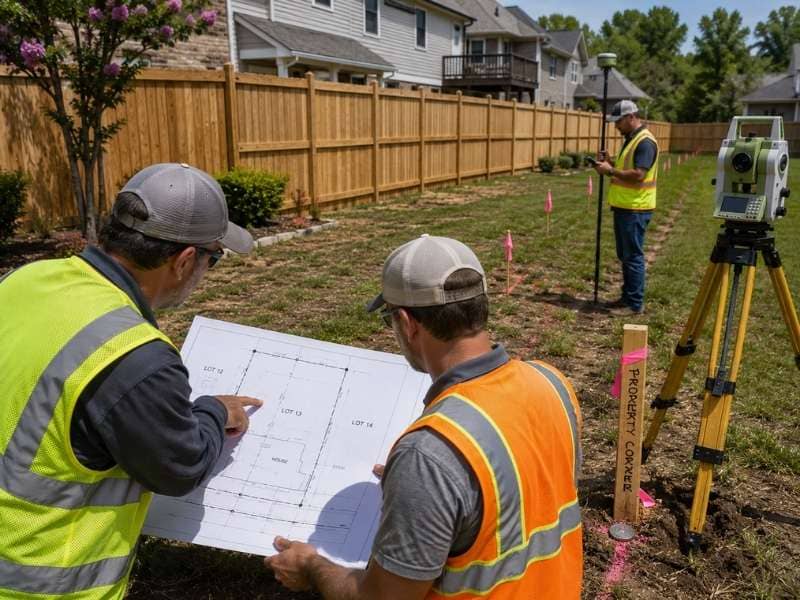
A property line survey is a check by a licensed surveyor that marks exactly where your land begins and ends. Before you build a fence, it’s the one sure way to know you’re putting it on your own property and not your neighbor’s. A little time spent on this up front can save you from tearing the whole fence out later.
How a Property Line Survey Reveals Your True Boundaries
Your deed describes your property in legal terms, but those words don’t line up neatly with the dirt in your backyard. A property line survey takes that legal description and marks the real corners of your land on the ground. A licensed surveyor uses records and precise tools to place or find the exact points where your lot ends. That’s the only way to know your true lines with any certainty.
Surveyors often mark those corner points with small metal pins or stakes, set right at each corner of the property. On rural or wooded land, they can sit a few inches underground, hidden under leaves, grass or years of dirt. A surveyor knows how to hunt them down, sometimes with a metal detector, and mark them so you can see them. Without that help, most people would walk right past a marker and never know it was there.
Why Old Fences and Trees Make Poor Boundary Markers
It’s tempting to trust the old fence line or the row of trees that’s always seemed to split two yards. The problem is those features rarely sit on the real property line. An old fence might have gone up in the wrong spot decades ago, and nobody ever checked. Trees get planted wherever someone likes them, not where a surveyor said the line was.
Guessing from these clues is how good neighbors end up in bad fights. You might build a brand-new fence a few feet onto the wrong side and never realize it until a problem pops up. Even a small mistake can force you to move the fence or spark an argument with the people next door. A survey replaces the guesswork with a line you can actually stand behind.
Fence Mistakes a Property Line Survey Helps You Avoid
The most common fence mistake is simple: building it on land that isn’t yours. When a fence crosses onto a neighbor’s property, that’s called an encroachment, and it can turn into a real headache. If it sits there long enough, some states even let the neighbor claim that strip of land as their own through a rule called adverse possession. The exact time limit changes from state to state, but the risk is real.
Easements are another trap a survey helps you dodge. An easement is a strip where someone else, like the power company or the city, has a legal right to run lines or reach equipment. Build a fence across one, and the owner can make you tear it down at your own cost. Many towns also set rules for how far a fence must sit from the line, and a survey shows you exactly where you stand. Knowing all of this before you dig keeps a weekend project from becoming a legal mess.
What to Check Before You Start a Fence Project
Before you buy a single fence panel, do a little homework on your own lot. Dig out your deed and any old survey paperwork you got when you bought the place, since those give a surveyor a big head start. Walk your corners and see if you can spot any existing markers, though don’t be surprised if you can’t find them. On big, wooded or uneven lots, the corners can sit far apart and hide under brush.
It’s also smart to think about what makes your lot tricky. A steep or overgrown property is harder to measure, and lines that haven’t been checked in decades may not be reliable anymore. If your neighbor has ever mentioned the boundary or you see conflicting fences and markers, treat that as a signal to get a fresh survey. A quick check now beats a costly fix once the posts are in the ground.
What Happens During a Property Line Survey
A property line survey is less mysterious than it sounds. First the surveyor digs into the records, pulling your deed, old survey maps and the plats filed with the county. This desk work tells them where your lines should fall before they ever set foot on your land. Good records make the whole job faster and cheaper.
Then the crew comes out to your property with their gear. They measure the land with GPS units and other precise tools, checking their numbers against the old markers they find and the records they read. When everything lines up, they mark your corners with stakes or flags so you can see the boundary with your own eyes. Many surveyors also hand you a drawing of your lot, which is worth keeping for your fence permit and your records. From there, you can plan your fence knowing exactly where the line runs.
Frequently Asked Questions
What is a property line survey?
It’s a check by a licensed surveyor that pinpoints the exact legal boundaries of your land. The surveyor reads your deed and records, measures the property and marks the corners on the ground. The result shows you where your land truly starts and stops.
Do I need a property line survey before building a fence?
It’s strongly recommended, and some towns require one for a fence permit. A survey keeps your fence on your own land and out of easements and setback zones. Without it, you’re trusting a guess that could cost you the whole fence later.
How long does a property line survey take?
It depends on the size and shape of your lot and how good the old records are. A small, well-documented yard might take a few days from start to finished drawing. A large, wooded or poorly recorded property can stretch to a couple of weeks or more.
Can a property line survey settle a boundary dispute?
A survey gives you solid, professional proof of where the line sits, which resolves many disputes on its own. Once both neighbors see the marked corners, the disagreement often clears up fast. If it doesn’t, the survey becomes key evidence, though a serious dispute may still need a real estate attorney.
How do I know if my property already has survey markers?
Walk to the corners of your lot and look for small metal pins, stakes or concrete markers, often set a few inches into the ground. A metal detector can help you find ones hidden under grass or leaves. Keep in mind that old markers can be wrong, or someone may have moved them over the years, so a surveyor should confirm them before you rely on them.
