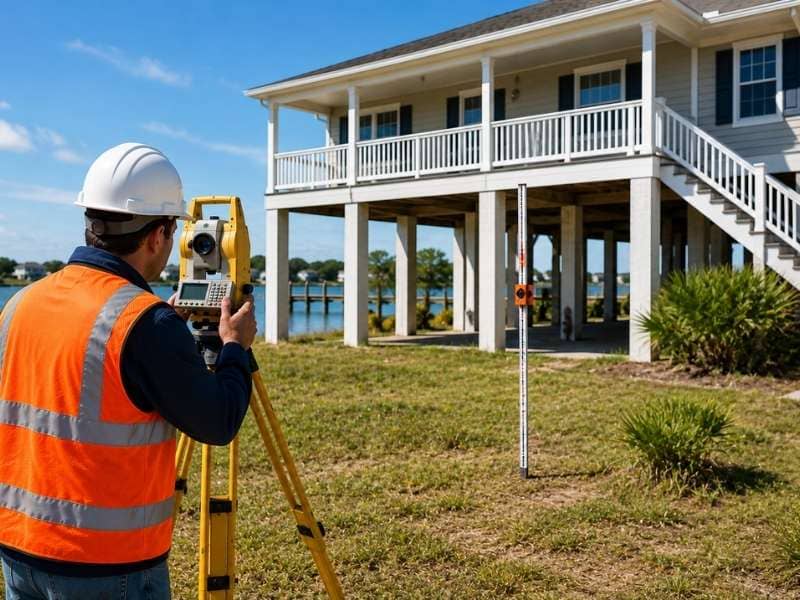
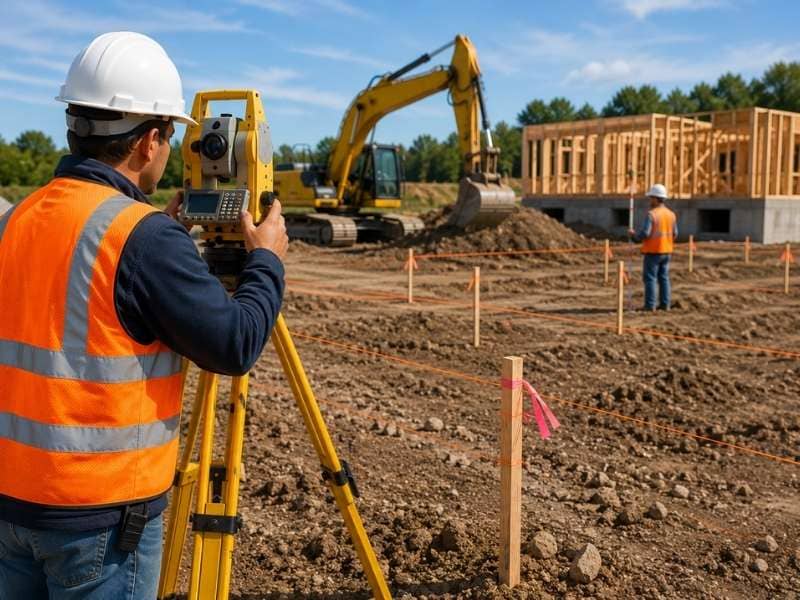
You found room to grow. More parking. A building addition. New usable space. Expansion sounds simple on paper.
Then work starts and problems show up.
Water collects where nobody expected. Slopes change the layout. Existing grades force redesigns. Utility paths create conflicts. Suddenly the expansion costs more than planned.
Developers often focus on the new space they want to build. The ground under that space gets less attention.
That mistake gets expensive fast.
A topographic survey gives you a clear picture of the site before plans move forward. It shows elevation changes, surface features and conditions that affect what can actually be built.
What a Topographic Survey Shows Before Expansion Starts
Property expansion is more than adding square footage.
The shape of the land affects design decisions long before equipment arrives.
A topographic survey records:
Elevation changes across the site
Existing structures
Surface drainage paths
Trees and visible site features
Retaining walls and paved areas
Utility structures and access points
These details become part of the planning process.
Without them, design teams work with assumptions.
Assumptions have a bad habit of showing up later as change orders.
Hidden Grade Changes Can Limit Buildable Space
Large changes in elevation are easy to spot.
Small ones are not.
A few inches of slope can affect where structures fit. That matters during property expansion. Floor elevations, grading plans and drainage systems all depend on accurate site measurements.
This matters even more in developed areas where expansion space already feels tight.
A site may look flat during a quick walk-through. Survey data often tells a different story.
Existing Features Create Planning Problems
Developers usually focus on the planned addition.
The site already has conditions that affect where that addition can go.
Examples include:
Utility boxes
Drainage structures
Existing pavement
Fences
Retaining walls
Access routes
Move a utility line late in the process and costs climb quickly.
Finding these conditions before design starts gives your team more options.
Expansion Changes Water Movement
Water follows the slope.
Change the site and water patterns change too.
Adding parking, structures or pavement creates new runoff paths. Areas that drained correctly before may stop draining correctly later.
Property expansion can redirect water toward neighboring areas or existing buildings.
Nobody wants drainage problems after construction finishes.
Survey data helps engineers review how water currently moves across the site before plans are finalized.
Contractors Need Real Elevation Data
Contractors build using measurements.
They need grades, reference points and elevations.
Missing data slows field work.
Crews stop. Questions start. Work waits for answers.
A topographic survey helps contractors estimate:
Earthwork needs
Fill requirements
Surface adjustments
Grading quantities
Site preparation work
Small site changes can affect budgets.
Early survey data helps avoid bad estimates.
Expansion Projects Often Trigger Permit Reviews
Many expansion projects require updated plans.
Review agencies may ask for elevation information or site data depending on project scope.
Projects involving grading, parking changes or major additions often need current site information.
Submitting plans with old information creates extra work.
Updated survey data gives design teams a stronger starting point.
When Should Developers Order a Topographic Survey?
Earlier than most people think.
Waiting until final design creates problems.
Order a survey before:
Site design begins
Grading plans start
Expansion layouts are drafted
Utility planning begins
Permit packages are assembled
Design teams make stronger decisions with current field data.
Late survey work usually means revisions.
Revisions cost time.
Property Growth Starts With Better Site Information
Expansion projects look simple from above.
The ground below tells a different story.
Grade changes, utilities, drainage paths and site conditions affect every decision that follows.
A topographic survey helps developers see those issues before construction starts.
Finding problems early costs less than fixing them later.
Frequently Asked Questions
Do I need a topographic survey before expanding a property?
Many expansion projects benefit from one. Site elevations and existing conditions affect grading, drainage and design decisions.
Can a topographic survey find utility conflicts?
It can identify visible utility structures and features that affect planning.
Does a topographic survey help with project budgeting?
Yes. Contractors use elevation data and site measurements when estimating grading and preparation work.
Can expansion affect drainage patterns?
Yes. Adding pavement or structures can change water flow across a property.
How long does a topographic survey take?
Smaller sites may take a few days. Larger properties or complex sites take longer.
Vacant land can look simple. Open space. Trees. Grass. A few markers near the road.
Then the questions start.
Where does the property begin? Where does it end? Does the fence belong to the neighbor? Does the driveway cross the line? Is the land size listed online even correct?
Buying land without knowing the exact boundaries creates problems that can follow a project for years. A boundary survey helps developers understand what they are buying before money changes hands.
The goal is simple. Know the lines before making plans.
What Is a Boundary Survey?
A boundary survey identifies the legal limits of a property. Surveyors study records, review deeds, inspect markers and collect field measurements to locate property lines.
A boundary survey may show:
Property corners
Boundary lines
Easements
Encroachments
Fences
Roads and access areas
Visible improvements
Adjacent property lines
Developers need more than rough estimates. Property decisions should start with real measurements.
Why Vacant Land Creates Confusion
Vacant land often creates a false sense of certainty.
There may be no buildings or obvious structures. That sounds simple until people realize property lines are usually invisible.
Grass does not show ownership.
Trees do not show ownership.
An old fence does not automatically show ownership.
Many buyers assume online maps show exact lines. They do not.
Tax maps help identify parcels. They should not replace survey work.
A site can look flat, clean, and ready to build at first glance. Then work starts and problems appear. Water collects in the wrong places. Slopes become harder to grade. Existing features create conflicts. Utility lines show up where no one expected them.
That is why survey mapping matters early in a project. It helps developers see hidden site conditions before construction starts. Good mapping turns land into usable information. It helps teams spot risks, avoid delays, and make better decisions.
The takeaway is simple. Survey mapping helps uncover site problems before they become expensive problems.
What Is Survey Mapping?
Survey maps often include:
Property boundaries
Ground elevations
Existing structures
Trees and vegetation
Utility locations
Drainage paths
Roads and access points
Surface features
For developers, this creates a clearer picture of the land before design begins.
Survey mapping helps identify land conditions that may create delays, redesigns, or extra costs. It gives project teams early warning signs.
Many site issues are not obvious during a basic walkthrough.
Survey data helps reveal:
Areas with poor drainage
Steep slopes
Surface elevation changes
Access limitations
Utility conflicts
Land use restrictions
Physical obstacles
Finding these issues early gives developers more time to adjust plans.
Hidden Drainage Issues Can Create Big Problems
Survey mapping helps locate low areas and water flow paths before grading starts. This reduces flooding and drainage surprises.
Water problems often create expensive setbacks.
A survey map can show:
Low Ground Areas
Some parts of a site collect water naturally. These areas may need drainage improvements.
Existing Flow Patterns
Water already follows certain paths across land. Ignoring those patterns can create future issues.
Slope Direction
Even small elevation changes can affect drainage.
Developers can use this information during planning instead of fixing water issues later.
Elevation Changes May Affect Site Design
Survey mapping shows how land rises and falls across a property. This helps teams prepare for grading and construction work.
A site with unexpected elevation changes often requires design adjustments.
Existing Features Can Create Conflicts
Survey maps document physical features that may interfere with development plans.
Developers sometimes discover obstacles after project design starts.
Survey mapping may reveal:
Large Trees
Protected trees or tree groups may limit usable space.
Fences and Existing Improvements
Old structures can cross planned development areas.
Access Restrictions
Driveways or roadway locations may affect site entry points.
Surface Objects
Retaining walls, ditches, poles, and drainage structures may require design changes.
These details help teams plan around obstacles instead of reacting later.
Utility Locations Matter More Than Many People Think
Survey mapping helps locate visible utility features that can affect construction decisions.
Developers often focus on building locations first.
But utility issues can create major changes.
Survey mapping may identify:
Utility poles
Fire hydrants
Manholes
Storm structures
Utility boxes
Surface utility markers
This information helps reduce conflicts during site planning.
Construction crews prefer fewer surprises after excavation begins.
Survey Mapping Supports Better Site Planning
Good site planning starts with good information. Survey mapping creates a stronger starting point.
Developers can use survey data to:
Improve lot layouts
Plan drainage solutions
Reduce redesign work
Coordinate with engineers
Prepare construction documents
Improve permit submissions
Projects often move more smoothly when teams begin with accurate site information.
Common Signs a Site Needs Survey Mapping
Not every issue is visible from the road.
Survey mapping becomes especially useful when:
Land has uneven terrain
Water remains after rainfall
Existing structures are present
Property lines are unclear
Access appears limited
The site contains natural features
Development plans involve multiple improvements
Even land that looks simple may contain hidden challenges.
What Developers Should Do Before Starting a Project
Survey mapping works best at the beginning of the process.
Before design work starts:
Review site goals
Understand planned improvements
Identify possible concerns
Schedule mapping early
Share survey data with project teams
Starting with accurate information often saves time later.
Final Thoughts
Site problems become harder and more expensive once construction begins. Small issues can create major delays if they stay hidden too long.
Survey mapping helps developers understand the land before major decisions happen. It reveals drainage concerns, elevation changes, utility conflicts, and site obstacles that may affect a project.
The goal is not simply creating a map.
The goal is spotting problems while solutions are still easier and less expensive.
Frequently Asked Questions
What does survey mapping show?
Survey mapping shows boundaries, elevations, structures, surface features, utilities, and other land conditions that affect development.
Why is survey mapping important before construction?
It helps identify site issues early so developers can reduce delays and avoid redesign costs.
Can survey mapping locate drainage problems?
Yes. Survey mapping often reveals slopes, low areas, and water flow paths that affect drainage planning.
Does survey mapping help with site design?
Yes. Accurate mapping helps improve layouts, grading plans, and project coordination.
When should survey mapping happen?
Survey mapping should happen early in the planning stage before design and construction work begins.