
Loan Closing Survey Issues That Can Slow a Purchase
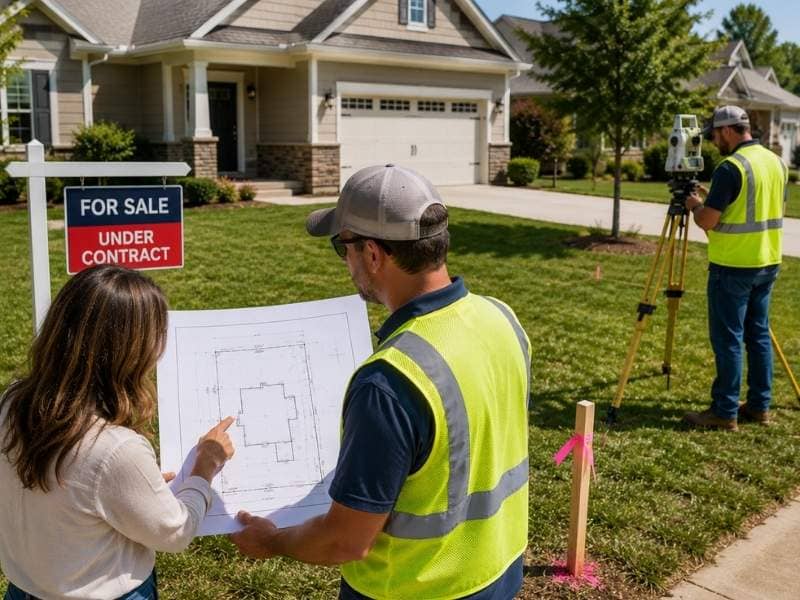
A loan closing survey is a check the lender or title company orders before a home sale can close. It confirms the house and other buildings sit on the land the deed describes, and it flags any boundary problems that could stall the deal. When a survey turns up a surprise, it can hold up your closing, so it pays to understand it early.
What a Loan Closing Survey Looks For
A loan closing survey exists to answer one thing for the lender: whether the property matches what the paperwork says. The surveyors confirm that the house, garage, sheds and other buildings actually sit on the lot in the sale. They also mark the property lines and check whether any structure crosses onto a neighbor’s land or the other way around. The report notes easements too, which are strips where the utility company or the city has a right to enter.
The lender cares about this because the property is their security on the loan. If the home sits on less land than the deed claims, or a garage hangs over the line, that changes what the property is worth. The title company uses the survey the same way, since it lets them offer full coverage without carving out an exception for boundary problems. In short, the survey proves everyone is buying and lending on the same piece of ground.
Survey Problems That Can Delay Closing
Most closings run smooth, but a survey now and then turns up something that puts the brakes on. A classic problem is a structure that crosses a boundary, like a neighbor’s fence, shed or driveway sitting a few feet onto the land in the sale. Until someone sorts that out, the title company may not clear the deal. Nobody wants to lend on or buy a property with a boundary fight already brewing.
Other snags come from the survey itself. Old corner markers sometimes go missing or drift out of place over the years, which makes the lines harder to pin down and the survey slower to finish. On top of that, a survey can reveal an easement running through a spot you had big plans for, like the exact corner where you wanted a pool. Each of these issues has a fix, but every fix takes time, and time is exactly what a closing date doesn’t leave much of.
Why Buyers Should Get a Loan Closing Survey Early
The best move a buyer can make is to order the survey right after the seller accepts the offer. Good surveyors stay busy and can book out for weeks, so waiting until the last minute is how the survey itself becomes the delay. Order it early, and the surveyor has room to get out to the property and finish the report well before closing day.
Early timing also matters for what the survey might find. If it turns up an encroachment or an easement issue, the buyer, the agent and the lender need time to work out a fix. That could mean asking the seller to move a fence, adjusting the price or writing up an agreement about the boundary. Rush all of that into the final days, and a deal that should have closed on time slips instead. A survey ordered early is cheap insurance against a delay nobody wants.
What Buyers Should Expect From the Process
The process is simpler than most buyers expect. Once you or the title company orders the survey, a licensed surveyor pulls the deed and any old records for the property. Then a crew visits the site, measures the land and locates the buildings and corners. A few days to a few weeks later, you get a drawing that shows the lines, the structures and anything that crosses them.
Some properties just take more work. Rural land and larger lots often have boundaries described in long, old legal terms rather than a tidy subdivision map, so the corners can be tough to find and confirm. A wooded or oddly shaped parcel adds time as well. If you’re buying that kind of property, expect the survey to take longer and plan your closing timeline with a little extra room.
How Sellers Can Help Avoid Survey Delays
Sellers have more power to speed a survey than they might think. The first easy step is digging up any old survey you got when you bought the home. If it’s recent enough and nothing has changed on the property, the lender might accept it or just have the surveyor update it, which is faster and cheaper than starting fresh. A signed statement that nothing has changed can sometimes do the trick as well.
The second step is even simpler: make the property easy to reach. A surveyor needs to walk the corners, so a locked gate, an aggressive dog or a yard buried in brush can stall the visit. Clearing a path and being reachable to let the crew in keeps things moving. A little help from the seller can be the difference between closing on schedule and watching the date slip.
Frequently Asked Questions
What is a loan closing survey?
It’s a survey the lender or title company orders during a home purchase to confirm the property matches its legal description. It checks that the buildings sit on the lot and flags any encroachments or easements. The lender relies on it to make sure the home is solid security for the loan.
Who pays for a loan closing survey?
In most deals the buyer pays for it as part of closing costs. That said, who pays is negotiable, and a seller sometimes covers it as a concession. The purchase contract usually spells out the arrangement, so check yours before assuming.
How long does a loan closing survey take?
Usually a few days to a few weeks, depending on the property and how busy the surveyor is. A small lot in a recorded subdivision goes quickly. A large, rural or oddly shaped property with fuzzy old boundaries takes longer, which is why ordering early helps.
Can a loan closing survey delay closing?
Yes, and it’s one of the more common last-minute holdups. If the survey shows a structure crossing a line or an easement problem, the title company may hold things up until someone fixes it. Ordering the survey early leaves time to solve those issues before the closing date.
Is a loan closing survey the same as a boundary survey?
Not quite. A loan closing survey is a lighter version aimed at the lender’s needs, mainly confirming the buildings sit where they should. A full boundary survey goes deeper to pin down and mark the exact property lines, which is what you’d want before building a fence or dividing land. Ask your surveyor which one your situation calls for.
