
Topographic Survey Insights for Better Site Plans
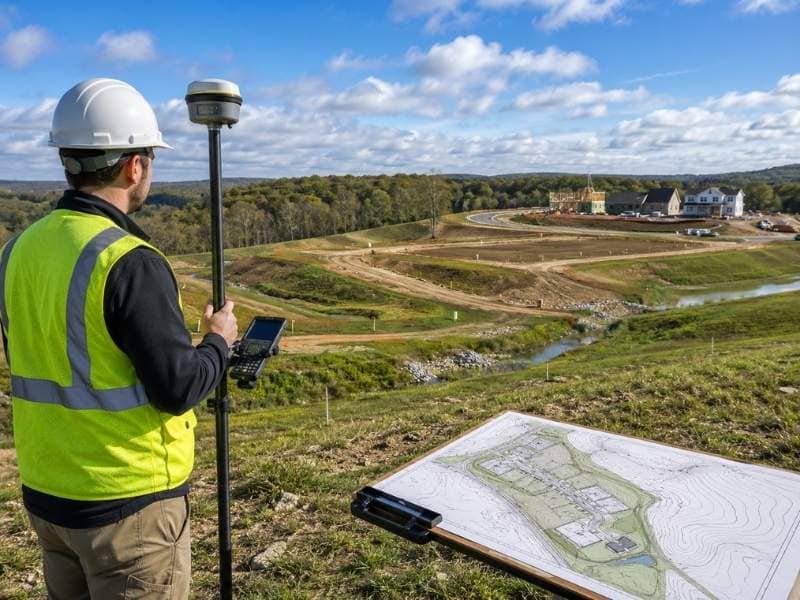
A topographic survey is the map that turns a rough site idea into a plan that actually works. It shows the exact shape of the land, including every rise, dip and slope. Designers use that picture to place buildings, roads and drainage in the right spots. Without it, a site plan is just a guess about ground no one has measured. With it, the design fits the land from the very first draft.
How a Topographic Survey Reveals the Shape of Your Land
A topographic survey records the height of the land at many points across a site. The surveyor connects points of equal height with lines called contours. Read together, those contour lines show the hills, valleys and flat spots of the property. The survey turns a flat map into a picture of the land’s real shape.
This is different from a survey that only marks property lines. A topo survey cares about up and down, not just side to side. It answers questions like how steep a slope is or where water would run. That height information is what design work depends on.
Why a Flat Map Is Never Enough for a Site Plan
A site plan has to fit the ground it sits on, and ground is rarely flat. A building placed on a steep spot may need costly extra footing. A road drawn across a low area may flood the first time it rains. Topographic data lets designers see these problems on paper, long before any dirt moves.
Good height information also saves money. When the plan matches the real slope, crews move less dirt and waste less time. Changes on paper are cheap, but changes in the field are not. Starting with accurate data keeps the whole project leaner.
Everything a Topo Survey Records on Your Site
A topographic survey records far more than bare ground. The surveyor maps the natural and built features that a design has to respect.
A typical survey captures things like:
- Ground elevations and contour lines across the site
- Slopes, banks and low spots where water collects
- Trees, ponds, streams and other natural features
- Existing buildings, driveways and walls
- Visible utilities like poles, drains and meters
Each of these shapes how a site can be used. A stream might limit where you can build, while a steep bank might need a retaining wall. Seeing them all on one map helps the designer plan around them with confidence.
Where Water Flows Shapes Drainage and Grading
Water is the main reason topographic surveys matter so much. The survey shows exactly which way the land slopes, so designers know where water will flow. With that, they can plan drains, swales and grading that move water away from buildings. Good drainage starts with knowing the shape of the ground.
Grading gets smarter too. Grading means reshaping the dirt to the heights a design needs. With accurate topo data, crews can balance the cut and fill, moving dirt within the site instead of hauling it. That cuts cost and keeps the work moving. Poor data, by contrast, leads to grading mistakes that are expensive to fix.
Timing a Topographic Survey to Your Design Schedule
The best time for a topographic survey is early, before the design begins. Designers need the land’s shape in hand to draw a plan that fits. Ordering late means redrawing the plan once the real heights come in. That wastes both time and money.
Some projects need one more than others. New buildings, big additions and any work that changes grading all call for fresh topo data. Sites with slopes, drainage trouble or lots of trees benefit the most. When the ground is anything but flat, the survey pays for itself in better decisions.
Frequently Asked Questions
What is a topographic survey?
It’s a survey that maps the height and shape of the land across a site. The surveyor records many elevation points and draws contour lines to show the relief. The result gives designers a clear picture of the ground before they plan.
What is a contour line?
A contour line connects points on the land that share the same height. Lines close together mean a steep slope, while lines far apart mean gentle ground. Reading them lets you picture the shape of a site from a flat map.
Why do site plans need a topographic survey?
A plan has to work with the land’s real slopes, not a flat guess. The survey shows where water flows and where the ground rises or dips. That lets designers place buildings, roads and drainage in spots that actually work.
How is a topographic survey different from a boundary survey?
A boundary survey marks the legal edges of a property, side to side. A topographic survey measures height, showing the ups and downs of the land. Many projects use both, since one defines the limits and the other defines the shape.
When should I get a topographic survey?
Order one before the design work starts, so the plan fits the ground. It’s most useful for new builds, additions or any project that reshapes the land. Sloped or drainage-prone sites benefit the most.
